


There’s no bigger entertainment company than Netflix. With over 300 million subscribers, the streamer has done it all—or at least almost all. You see, these past ten years, the streamer has been chasing the Oscar for Best Picture and has come close several times, but the top trophy still eludes them. Why do they want to win the Oscar so badly? To legitimize everything that they’re doing, including and especially their tepid treatment of theatrical exhibition.
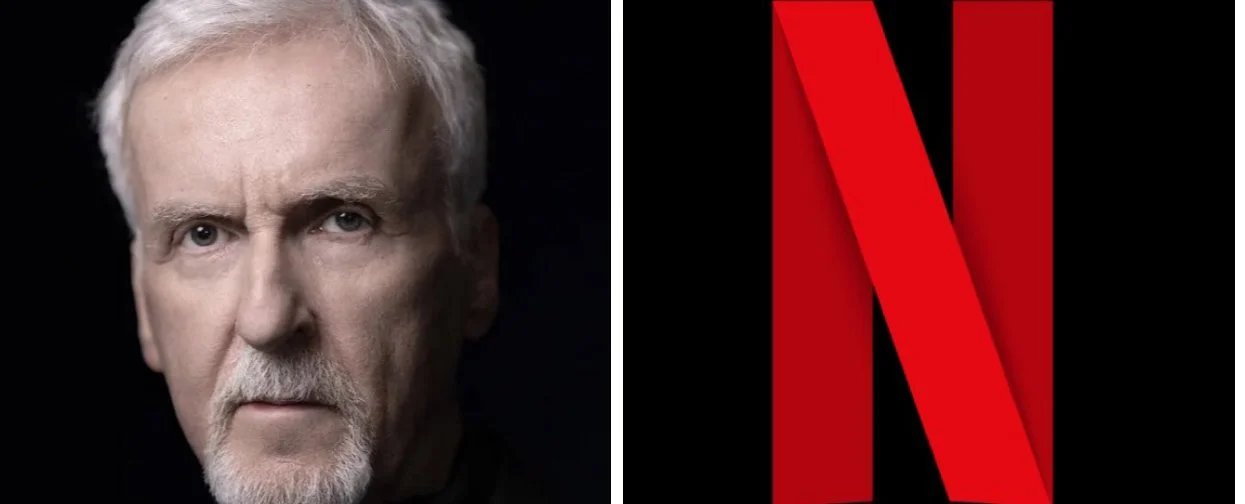
With recent reports confirming Netflix’s serious intentions to buy Warner Bros., and their less-than-believable promise about keeping Warners’ theatrical strategy if they acquire the studio, James Cameron has entered the conversation.
In an interview with The Town’s Matt Belloni, and when asked about Netflix’s current attempt to acquire Warner Bros., Cameron—the king of theatrical—didn’t hold back. He’s pulling for Paramount to win, but really, anything but Netflix as far as he’s concerned:
Cameron: I think Paramount’s the best choice. Netflix would be a disaster. Sorry, Ted, but geez. Sarandos has gone on the record saying theatrical films are dead. “Theatrical is dead. Quote, unquote.”
Belloni: He’s now promising theaters if he buys Warner Bros.
Cameron: [laughs] It’s sucker bait. “We’ll put the movie out for a week or 10 days. We’ll qualify for Oscar consideration.” See, I think that’s fundamentally rotten to the core. A movie should be made as a movie for theatrical, and the Academy Awards mean nothing to me if they don’t mean theatrical. I think they’ve been co-opted, and I think it’s horrific.
When asked to elaborate on whether Netflix should be allowed to have its films vie for Oscars, Cameron said he doesn’t believe they should—unless they change their release strategy.
Belloni: You don’t think they should be allowed to compete for Oscars?
Cameron: They should be allowed to compete if they put the movie out for a meaningful release in 2,000 theaters for a month.
Netflix CEO Ted Sarandos recently stated that he believed the traditional moviegoing experience was “an outmoded idea” and that Netflix was actually “saving Hollywood.” The balls on this guy.
It’s no secret, Netflix poses a very real and growing threat to the theatrical experience — not because it’s succeeding, but because it’s redefining success in a way that sidelines theaters entirely. What’s worse is the way Netflix operates like a tech company pretending to care about cinema. It finances prestige projects and awards contenders every year, just long enough to meet Oscar eligibility requirements, then yanks them from theaters and buries them soon afterward.
The industry is scared of Netflix, especially studio heads who believe the streamer’s fervent denial of theatrical rollouts will put them out of business soon. Why would these same producers, distributors, directors — all Oscar voters — go out of their way to vote for the enemy? That’s part of the reason why Netflix has yet to win Best Picture.
And yes, filmmakers are complicit as well. Powerful directors like Greta Gerwig and Guillermo del Toro jumping ship to Netflix aren’t just career moves — they can also be seen as statements, intentional or not, that the theater model isn’t worth fighting for. It signals to studios and audiences alike that the big screen has lost its relevance.
Since 2015, Netflix has tried very hard to win Best Picture, pouring hundreds of millions of dollars into Oscar losers: “Roma,” “The Irishman,” “Mank,” “Trial of the Chicago 7,” “The Power of the Dog,” “All Quiet on the Western Front,” “Emilia Perez.”
This year, Netflix will again be part of the race, with titles such as “Frankenstein,” “Train Dreams,” and “Jay Kelly” vying for awards. Yet each of these films received the same brief 2–3 week rollout — some even less — on no more than 400 screens, if that. And now the streamer expects Oscar voters to celebrate them.